Showing posts with label theology. Show all posts

9.24.2014

Theology Quotes: Rosemary Radford Reuther

I'm digging back into the research for my MA thesis. My working title is "Human Trafficking as Social Sin: An Ethic of Resistance." Next week I am going to start writing, but for now I'm finishing up reading on social sin.  One of my sources led me to look back at Rosemary Radford Reuther's classic text, Sexism and God Talk: Toward a Feminist Theology.  She of course is writing (rightly) specifically about the social sin of sexism, but it applies to all "isms" and forms of social sin.

I especially appreciate how she both draws distinctions and makes the connection between individual responsibility and the systemic nature of social sin. Change begins with us, here and now, in our relationships with God, self, and other through our choices and identity as authentic human persons.


8.15.2014

Suffering, Remaining & Witness

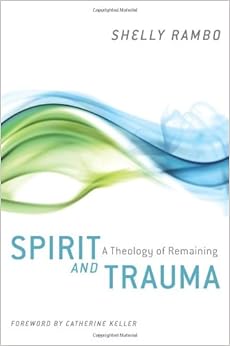
I was delighted to see that Nancy Schreck, OSF drew upon the work of Shelly Rambo in her 2014 LCWR Keynote address.  I have been reading (and re-reading) Rambo's Spirit and Trauma: A Theology of Remaining (2010 Westminster John Knox Press) these days. I first used Rambo's book for a paper I wrote on the ministry of reconciliation with trafficked persons. I'm now using it as part of my thesis work (today in fact .... it sits open before me as I procrastinate in my research with this blog post!)

It was interesting to read Schreck apply Rambo's work on trauma to the place where women religious find themselves today.
This shifting within religious life and in world events has taken us to what I call a middle space. We find ourselves in this place of both creativity and disorientation. Much of what was is gone, and what is coming is not yet clear. ... 
I am greatly helped in this next section by the work of Shelly Rambo and her book Spirit and Trauma: A Theology of Remaining. Rambo speaks about a theology of remaining in difficult places because "when you enter certain worlds, they do not let you go."  
Though her work is with trauma survivors and in no way do I want to diminish the aspect of trauma, I do think some parallels with or experience can be drawn. ... 
The task of "remaining" in this uncertain place is to pay attention to the reality that does not go away. In this experience all of our theological categories are re-defined: concepts like love, divine presence, incarnation, and world view are reshaped. Knowledge, truth, and experience of our world are transformed, placed on much more fragile terrain because of the radical disruption ... 
What we try to do in the middle space is to describe events that shatter all that one knows about the world and the familiar ways of operating within it. What if from this place we simply witness to and provide testimony about this experience, with special attention to truths that often lie buried and are covered over. ... 
In this middle space that is what we do: we call attention to things, things others might bury, or are afraid to face. That is why I say, however long the night we will be faithful and we will speak about what we are learning in the middle space. We trust Holy Mystery revealed in our midst. (Excerpt, Schreck, pages 7-10)

I need to think and pray into that some more, especially as it relates to my experience as a woman religious.

I've certainly been thinking and praying with a heavy heart today about the immense (human induced) suffering in our world today. And I mean, quite literally, today. A friend recently posted a very poignant list she's been carrying around with her these days: "Ferguson (police state, Black Man Walking), Gaza, Ukraine, Malaysian Air Flt 17, Refugee kids fleeing violence in Central America, Yazidi's fleeing the Islamic State, The Islamic State, Syria, Afghanistan, Ebola ..." No doubt you have your own (similar) list. It seems to be growing by the day.  So much violence, oppression, death, and trauma being caused to human beings by other human beings. One can feel paralyzed, helpless, or even complicit.  Our globalized media savvy reality means that we are present to this suffering on one (superficial/virtual) level, even though the vast majority of us are removed in our privileged spaces of comfort and safety. In my case, I think that's at the root of much of my own sense of being uncomfortable in my own skin as human induced suffering rages on and seemingly spreads. Removed as I/we are from the reality of suffering, I worry that it becomes easier to ignore or fail to act against it, thereby fueling more suffering.

Which is where I find Shelly Rambo's work so helpful:

In our current world, we are witnessing ongoing atrocities and different manifestations of suffering. The invisible forces of global capital and the undetectable effects of new wars and their justifications demand that theological accounts of suffering attend to the elisions constituting traumatic suffering. Although some may say that all 'suffering is suffering,' there are different expressions of that suffering and its effects that press for renewed theological articulation. I understand this as the increased invisibility of suffering and the power of its erasure. The discourse of trauma engages these invisible realities, continually calling attention to what falls outside the lines of what is, or can be, represented. The challenge of theological discourse is to articulate a different orientation to suffering that can speak to the invisibility, gaps, and repetitions constituting trauma.... 
A theology of the middle Spirit can help us rethink the theological discourse about suffering, given its new unique dimensions in trauma. Bessel van der Kolk acknowledges that one of the primary effects of trauma is a crisis of the human spirit. This crisis refers to a complete loss of meaning and trust in the world. ... How does a theology of the Spirit meet this crisis of spirit? ... 
I have started to envision practices patterned after this testimony, practices of tracking and sensing that propel us to recognize suffering amid its multiple elisions. .... 
The tracking and sensing, then, not only unearth and give theological significance to the unknown and unutterable within human experience, but these practices also testify to something of who we understand God to be. The work of the witnesses is to track the undertow and to sense life. But this witness is, as well, a testimony that runs deeper than we might imagine, to the nature of divine love. In the middle, divine love is witnessed in its remaining. ...The work of tracking and sensing is sanctifying work, the work of making love visible at the point where it is most invisible. 
If we read this sacred story as a story of survival, we are pressed to think about what it means to remain in the aftermath of a death that escapes our comprehension. To witness this sacred story is also to receive it for the truth that it tells: love remains, and we are love's witnesses. ... 
From this space, a different vision of life can be glimpsed. It is life as remaining. This transformation, this redemption in the abyss of hell, is not about deliverance from the depths but, instead, about a way of being in the depths, a practice of witnessing that sense life arising amid what remains. The middle story is not a story of rising out of depths, but a transformation of the depths themselves. 
(Excerpt, Shelly Rambo, Spirit and Trauma: A Theology of Remaining, 169-172)
A lot of words, many of them big theology words. But really, if I am even beginning to understand their power, I think it is summed up best by these two contrasting photos that have come out of Fergusson:


Top: Violence, suffering, and trauma.
Bottom: Witness, remaining, and healing.

3.12.2014

Theology Quotes: Eric H.F. Law

It's cool when you get a chance to read work for school by someone you've actually interacted with in real life.  This semester I'm reading an oldie but goodie by Eric H.F. Law for my class on spirituality and leadership, 1993's The Wolf Shall Dwell with the Lamb: A Spirituality for Leadership in a Multicultural Community.

I've never met Eric Law, but I did work with him a little in my role as editor of A Matter of Spirit, the quarterly journal of the Intercommunity Peace and Justice Center in Seattle. In that role, I had the unique opportunity to cold call (or cold email as the case may be) lots of folks, from Richard Rohr to Michael Crosby to Elaine Prevallet to Frida Berrigan (Catholic theology/religious life/peace activist nerds will know who those folks are). The conversation went something like this: "I'm the editor of a journal for a peace and justice center in Seattle. We've got an upcoming issue on X and think that you would be uniquely positioned to break open the topic for our readers." Then, assuming they were still on board, I'd give them a very short time line, an outline of what we were looking for, and break the news that this would be pro bono. I was often amazed at the gracious response and genuine desire to move the conversation forward with our readers. (Sometimes of course my cold calls/emails went into a black hole where they were never to be seen again).

This is a long way of saying that I had one of these interactions once upon a time with Eric Law. Except that he exceeded my expectations.  Not only was he gracious and genuinely desired to break open the key elements of culture and diversity for our readers, he surprised me. You see, his article was due the day after our nation executed it's target killing/assassination of a certain big name terrorist. Fear of the big bad wolf was replaced by college students partying in the streets. It was a strange moment, if you recall. Anyway, that morning I had an email from Eric Law. He asked for an extension, not because his article wasn't finished (it was), but because given this change of events he knew he had to approach it differently. Two days later, he sent me this article: Fear: Conqueror, Exploiter, and Miner.  Not only was the article amazing, I was impressed by his integrity, honesty, and commitment to this little side project for a small non-profit in Seattle.

Back to my homework. I spent a bit of time this afternoon reading his chapter on the need for leaders in multicultural community to be engaged in power analysis. It really struck a chord and is something I want to spend more time reflecting upon (and trying on). So I thought I'd share it with you, my bloggy friends!


3.03.2014

Theology Quotes: Kenneth Himes

My bureaucratic past, political childhood and political science education are neatly meeting my religious life and study of theological ethics these days in a course titled "Catholic Moral Teaching and Public Policy Debates."  Our main text is hot off the presses (2013): Christianity and the Political Order: Conflict, Cooptation, and Cooperation by Kenneth R. Himes, OFM, a professor of Christian Ethics at Boston College. It's a great book that looks at the engagement of Christianity, specifically the Catholic Church, with the state and political realm in historical and global context.

This week, I read some of his thinking about social sin (a major research interest of mine). I figured this was highly appropriate as we move into Lent with Ash Wednesday approaching. Not familiar with Social Sin? "Social sin refers both to the ways in which our personal sins become embodied in unjust social structures and to the ways in which these structures, having taken on an independent life of their own, make it harder to resist the evil they embody" (Himes, 249). For example, an act of discrimination or hate speech is a personal sin, but is embedded in our social structures as racism, which takes on an independent life of its own, in a sort of vicious cycle. With that mini course in social sin 101, I give you this quote from Himes to ponder:


2.19.2014

New Blog Feature: Theology Quotes

Given that I spent an inordinate amount of my time reading theology and will be doing so for the next year and a half, I decided to add a new feature to the blog: Theology Quotes. Our first installment comes from an article by Gustavo Gutiérrez titled "The Option for the Poor Arises from Faith in Christ," in Theological Studies 70 (2009) 317-326. Rather than overload you with words or long quotes, I have distilled his message into the following:


Amen!


Feel free to share the photo on Facebook, Twitter or your own blog!

9.02.2013

A New School Year

Classes start tomorrow at Catholic Theological Union.  It's my second year of graduate studies here.  I am half way through my course work for my research MA in Theology, with a major in Social Ethics and a minor in Spirituality.  I'm also earning a Certificate in Spirituality.

My classes this Semester are evenly split between ethics and spirituality.  Tomorrow morning at 8:30 AM the adventure begins with a seminar called Holocaust & Genocide: Ethical Reflections. Given everything going on in the world today and our sordid shared history of the past 50 years, this is sure to be a challenging class.  My professor is an expert on the Holocaust and has been deeply involved in Catholic-Jewish dialogue for many years.

Tomorrow night I'm starting Medical Ethics.  While I am studying social ethics, I also realize the importance of having a good grounding in reflection and practical application of our Catholic ethical and religious directives. My religious community also sponsors hospitals so this way I can be a resource. This is the same professor I had for sexual ethics last semester so I know it will be a great (if challenging) class.

Wednesday afternoon my class begins on Religious Life in the 21st Century: Creating Communities of Hope on a Global Scale.  Obviously the topic is one close to my heart.  We'll be reading the latest volume of the trilogy by Sandra Schneider, IHM as well as a variety of other thought provoking resources.  I know the professor and several of the students (all young nuns from Giving Voice) so this promises to be an excellent opportunity.

My last class is on Wednesday evenings.  It's a part of a public lecture series on the Spiritual Classics of the Early Church.  A group of CTU students will meet with the professor after the weekly lecture evenings for a more academic class.  We'll be looking at classic writings from early church and desert fathers and mothers and applying them to our spiritual lives today.

I'm also continuing my internship with the Bernardin Center, which involves research on themes of peacebuilding, conflict and reconciliation.

As you can see, it promises to be a very rich and challenging Semester! I feel very blessed that my CSJP community has missioned me for this time of studies and learning. I try to shine the light of our Charism and spirituality on everything I do!

I'm sure there will be insights and learnings that I'll want to share with my bloggy friends.  Please keep all students, teachers, and administrators in your prayers as a new school year begins!

11.10.2012

On Prudence & Religious Life - Louise Dempsey, CSJP

I'm engrossed in some serious research for three research papers that are due in exactly one month.  One of the papers is on the virtue of prudence.  I'm looking at prudence as considered from Aquinas to today, with particular attention to its potential in the moral formation of 21st century consumers.  We shall see where that goes.  At the very least I will learn something in the process.

When I was in New Jersey last month, I discovered that I am by no means the first CSJP to explore the virtue of prudence.  One of my CSJP Sisters lent me a copy of a 1964 Masters Thesis written by one of the "giants" of our community, Sister Louise Dempsey. I knew Louise in her later years after a stroke when she had a gentle smile but was unable to communicate much otherwise.  She was elected our first "Sister President" in 1970.  I also had a chance to get to know her a bit in this capacity during a novitiate research assignment on our Congregation Leaders. Sister Louise passed away in 2008. She was an amazing woman by all accounts.

Now I am reading her 1964 Masters Thesis from her studies at the Providence College Summer School of Sacred Theology for Sisters.  Given that she was instrumental in my community's response and renewal following Vatican II, it is a true privilege to be reading her early thinking on the topic.  You see, her thesis was entited "The Function of Prudence in a Program of Renovation."

For the purposes of my own research paper, she is now teaching me, putting the theology of Thomas Aquinas into very understandable language and pointing me to the sections I need to read in the Summa!  She is also teaching me about religious life, the renewal, and what it means to be a Sister of St. Joseph of Peace.  Here are a few of the more key passages. Enjoy!

"Religious life, even by its very name, implies the necessity for growth, change, adaptation.  All living beings experience such transformation, otherwise death or extinction is inevitable.  In order, however, to insure the permanency of the essentials of this religious life in the process of this growth and development, prudence is indispensable so that wisdom and zeal will render adaptation and renovation efficacious.  The giving or restoring of life, even living itself, has always involved risks; religious life is not immune to this law.  The saints risked everything."

“The necessity for adaptation and renovation is forcing itself on religious institutes. The problems to be solved and the decisions to be made repeatedly call for the application of the virtue of prudence.”

"Changed times are to be met with new and appropriate means.  Responsibility to effect such changes devolves upon Major Superiors and General Chapters who must proceed conscientiously, prudently, and courageously always under the direction of ecclesiastical authorities.  Cardinal Suenens succinctly expresses the vital challenge: 'The whole matter,' he said, 'is summed up in the question: where and how are the cause of God and the visible extension of His kingdom best served?'"


"While the basic and fundamental elements of religious life should be maintained and nurtured, those which are no longer beneficial or efficacious, and which even hinder a greater good, should be discarded.  This is the key point that demands a sincere, prudent investigation. ... It is in these areas that the virtue of prudence will fulfill the role of a special guide since all programs of renovation and adaptation are nothing more than the applications of prudence within modern religious life.  The abilities to make proper decisions and to assume responsibility with competence are marks of a mature person."


"Applied to the attitudes of the founders of religious congregations, it appears evident to the contemporary nun that the founders were not satisfied with the service of the needs of the Church in their day; otherwise they would not have founded a new religious body. Experience also serves to prove the age-old truth that a living organism does not remain immobile for a long time, that respect for the past should not be a deterrent to the progress of today."


"The Church's needs today, however, demand the presence of Sisters in the direct apostolate.  Since they are the normal auxiliaries of the hierarchy in the apostolate, the Sisters must not fail in this great mission.  Responsibility in areas of religious instruction, parish organization, and social work for the greater good of souls presents a reasonable demand upon Sisters.  No one would maintain that a Sister's energies are unbounded or that she is expendable but the attainment of her capabilities is far from being realized.  The anti-feminist tradition, too often inspired by some canonists and spiritual writers, militates against nuns' freedom to participate in areas which could profit by their presence and in ways would hasten a desirable renewal.  Prudence is the virtue of human risks, and risks must be taken.  Superiors must assess these risks cautiously, seriously, conscientiously."


"The spirit of the community should be the spirit of the founder whose spirit was one of adapting herself, her works, her community to the needs of the age.  ... A real knowledge of one's religious congregation as well as of the needs of the present age is essential so that one can prudently discern which observances can be adapted."


"The Church, the Mystical Body of Christ, presents compelling reasons for the necessity of adaptation, both through example and through the Gospel itself.  Since religious are canonically erected only participating in the living organism which is the Church, they are faced with the alternative: adaptation or death.  Renovation is the law of Divine Providence evident in the renewal within the Church of approved devotions and liturgical functions suited to time and place.  Renovation has been asked for by the express will of the Supreme Pontiff exercising his supreme authority over religious institutes.  Adaptation is the universal law of history from which religious exclude themselves at the risk of becoming extinct."


"The virtue of prudence is the perfection of the ability to do or to act. Its function in a renovation program is impossible to assess, but no one is ignorant of the fact that he [or she] is obliged to love the good and accomplish it. Similarly it is more than common knowledge that the good most characteristic of the nature of [the human person] is 'to be according to reason.'  Since, however, love of the good grows by doing good, the foundations of prudence are sunk deeper and firmer to the extent that prudence bears fruit in action. And of such a one who thus acts truth Holy Scriptures assures us that he [or she] 'comes to the light.'"

10.10.2012

Swimming in Theology

On Monday I joined my sister and her family for a trip to the pumpkin patch.  It was a much needed study break and great fun.  They had lots of activities and "fall" themed displays.  One of them was a corn pool.  Yes, you heard me correctly, a corn pool.  Take some bails of hay to make an enclosure.  Fill it with kernels of corn.  Add a lifeguard complete with lifeguard chair and whistle.  Mix in some kids.  You get the picture.

My nephew had great fun swimming in corn.  I've been reflecting on this image (captured of course with my smart phone) as I approach the midpoint of my first semester here at CTU.  I'm having great fun swimming in theology.  It's lots of work.  Sometimes your feet, or head, or entire body gets buried (it was also like a big sand box full of corn).  But then you shake it off and dive back in.

We have reading week next week.  I'm headed to New Jersey for our community assembly and to visit with our Sisters and Associates in the midst of my wading in theology.  In addition to assigned course reading--which amazingly I am mostly on top of--I've also got oodles to read for my big research papers.  I have two of my three research proposals submitted and approved, so I need to get going on those.  I've also got an idea for my third paper, so I'm hoping to read enough to come up with a proposal for that one.

I'm also adding Latin and French language study into the mix.  It's kind of like diving into a different pool for a bit.  Speaking of .... I need to close this post and get back to my world of words.

If I'm a little less frequent on the blog these days, it's because I've been going on a long distance swim and don't really have time to come up for air. But all is good!

6.24.2008

Radical Amazement

I'm reading a book recommended by my Vows/Universe Story workshop presenter last week: Radical Amazement: Contemplative Lessons From Black Holes, Supernovas, and Other Wonders of the Universe by Judy Cannato.
The fact that we are the universe come to conscious self-awareness is radically amazing. Consider this: You are able to sit and read these words as the result of 13.7 billion years of development. Over the last four billion years, life on Earth has developed from primordial cells that did not even have a nucleus into Homo sapiens. The water in your body contains primordial hydrogen formed in the first seconds of the Big Bang. The carbon atoms that form you came together as a result of the explosion of a supernova. The concentration of salt in your body matches the concentration of salt in the ancient seas. Your cells are direct descendants of unicellular organisms that developed billions of years ago. You have a reptilian brain and are able to walk courtesy of vertebra that developed 510 million years ago. You see because chlorophyll molecules mutated so that, like plant leaves, your eyes can capture the light from the Sun. And in your mother's womb your tiny body repeated the whole process of multicellular life on Earth, beginning as a single cell and then developing greater and greater complexity.
That is pretty amazing!

I bought this book because I am not a science type person, and it was described as giving 8th grade science level descriptions. I'm about half way through and I think I pretty much understand it! Plus, it's just very well written. I highly recommend the book if you're thinking about exploring the spiritual implications of our broadening understanding of the universe.

5.14.2008

our extraterrestrial brothers and sisters

Both my brother and bloggy friend Garpu pointed out this tidbit:
Believing that the universe may contain alien life does not contradict a faith in God, the Vatican's chief astronomer said in an interview published Tuesday.

The Rev. Jose Gabriel Funes, the Jesuit director of the Vatican Observatory, was quoted as saying the vastness of the universe means it is possible there could be other forms of life outside Earth, even intelligent ones.

"How can we rule out that life may have developed elsewhere?" Funes said. "Just as we consider earthly creatures as 'a brother,' and 'sister,' why should we not talk about an 'extraterrestrial brother'? It would still be part of creation."

I was reminded of the time my 4 & 5 year old Sunday School class devolved into a discussion of space aliens.

... another little boy told me that his dad believed in Aliens. The class was heavy on the boys, and so conversation took a GIANT detour into the realm of the space alien, whether they existed, and if so if God loved them too. Heavy science fiction theology for the age group. I was struggling with trying to figure out how to get us back to planet earth and human beings - since I knew for sure both of those existed. It was tough going. As they say, resistance is futile. And of course, this is just when my pastor walked into the room. He looked at me, smirked and raised an eyebrow, and headed out the back door. He was just using our room as a shortcut.
I wish I'd had this bit of theology to impart. Hopefully the little boy who brought up the topic (who is probably 14 or 15 by now) reads this story!

By the way, did you know that the UN has an office for Outer Space Affairs?

12.04.2007

So delightfully planted

I've been reading some of Catherine of Sienna's writings lately. This bit in particular has stuck with me.
The Circle of Self-Knowledge
Imagine a circle traced on the ground, and in its center a tree sprouting with a shoot grafted into its side. The tree finds its nourishment in the soil within the expanse of the circle, but uprooted from the soil it would die fruitless. So think of the soul as a tree made for love and living only by love. Indeed, without this divine love, which is true and perfect charity, death would be her fruit instead of life. The circle in which this tree's root, the soul's love, must grow is true knowledge of herself, knowledge that is joined to me, who like the circle have neither beginning nor end. You can go round and round within this circle, finding neither end nor beginning, yet never leaving the circle. This knowledge of yourself, and of me within yourself, is grounded in the soil of true humility, which is as great as the expanse of the circle (which is the knowledge of yourself united with me, as I have said). But if your knowledge of yourself were isolated from me there would be no full circle at all. Instead, there would be a beginning in self-knowledge, but apart from me it would end in confusion.

So the tree of charity is nurtured in humility and branches out in true discernment. The marrow of the tree (that is, loving charity within the soul) is patience, a sure sign that I am in her and that she is united with me.

This tree, so delightfully planted, bears many-fragranced blossoms of virtue. Its fruit is grace for the soul herself and blessing for her neighbors in proportion to the conscientiousness of those who would share my servants' fruits. To me this tree yields the fragrance of glory and praise to my name, and so it does what I created it for and comes at last to its goal, to me, everlasting Life, life that cannot be taken from you against your will.

A beautiful image (tree image!) from a doctor of the church. There's so much packed into that passage! Really, this passage speaks to me of what the novitiate is all about. Spending time to get to know oneself, but in the context of the life of faith, in the context of God. Our constitutions speak of it in terms of "transformation in Jesus Christ." This tree image is a beautiful way really to wrap your head (and heart) around that! You can think of the novitiate process as a "delightful planting" of sorts. Of course it doesn't always seem 'delightful' - there are prickly bits as well - but you know what I mean! ;)

11.17.2007

fishook

This afternoon we went to a lovely workshop at Ealing Abbey by composer Margaret Rizza. It was a combination of prayer, silence and music. She was conducting us like a choir towards the end - even those of us who aren't quite tone deaf but can't really sing either. A wonderful way to spend an afternoon!

Anyway, she shared with us a lovely quote by Meister Eckhart that I knew I had to share with my bloggy friends. We could all do with spending some time reflecting on (and living this), I think!
God lies in wait for us with nothing so much as love.

Now love is like a fishhook.

A fisher cannot catch a fish unless the fish first picks up the hook. If the fish picks up the hook, no matter how much the fish may turn and squirm the Fisher is certain of the fish. Love is the same way. Whoever is captured by love takes up this hook in such a fashion that foot and hand, mouth and eyes, heart and all that is in that person must always belong to God.

Therefore, Look only for this fishhook, and you will be happily caught. The more you are caught, the more you will be liberated.

7.23.2007

what obedience really means

I was reading an article by Sandra Schneiders, IHM for our vows discussion group tomorrow, and came across this quote. I thought some might find it interesting in light of my last post. For me it really pinpoints how I understand the vow of obedience:
If, in the past, obedience has been understood as submission or compliance, perhaps today it is better understood as responsible participation and whole-hearted cooperation. To cooperate is to work together. Religious Life is a working together in the Spirit of all the members in the construction of their life and the effecting of their mission. By vowing obedience every member commits her or himself to that enterprise, in season and out of season, when convenient and inconvenient, when one's own ideas and projects prevail and when they do not. To vow obedience is to commit oneself to participate in the process of discernment and in the work of embodying the fruits of discernment in life and mission. To stay at the table of discernment, to come back from temporary disillusionment, dismay or even despair, to speak with courage and listen with vulnerability, to respond responsibly to decisions flowing from communal discernment and/or articulated by legitiate authority are all part of obedience.
-Sandra Schneiders, IHM, "Religious Life in the Future."

7.12.2007

Theologians

There's a song by Wilco that's been going though my head this week as we've been attending the Summer Institute at Fordham.
Theologians
They don't know nothing
About my soul
About my soul

I'm an ocean
An abyss in motion
Slow motion
Slow motion

Inlitterati lumen fidei
God is with us everyday
That illiterate light
Is with us every night

Theologians
That don't know nothing
About my soul
Oh they don't know
(You can listen to the song in question - Theologians - free on the Wilco website by clicking here and then clicking on the song title.)

Now while the song has been going through my head all week, I'm not sure I agree with the thesis. Theology by its very nature is faith seeking understanding. Perhaps we in the post modern world do sometimes exist as an "abyss in motion," but that's all the more reason to seek understanding and to explore the bigger questions. And I think it stands to reason that not only do we need help sorting out the bigger questions, there's no sense in starting from scratch if there's a body of work and understanding already in existence that one can build upon (and perhaps look upon with a critical eye)

One of the seminars we attended this week was with Sr. Sandra Schneiders, IHM on the topic of "Spirituality, Religion & Theology: Conflict or Conversation." We spent four days on the topic and I've got lots of info to process and much to much for a blog post. One quote stood out for me, however, particularly in light of these lyrics:
"There is always a theological moment in spirituality, but spirituality gives rise to theology, not the other way around."
Theology isn't (or perhaps I should say shouldn't) be done in a vacuum. It is a human reflection on the human experience of and search for God. Theologians might not know much about my particular soul, but the study is founded on the state of the human soul in general.

Those are my random somewhat disjointed thoughts this evening. Like I said, lots to think about.

As for the song, in any case, it's a catchy tune!